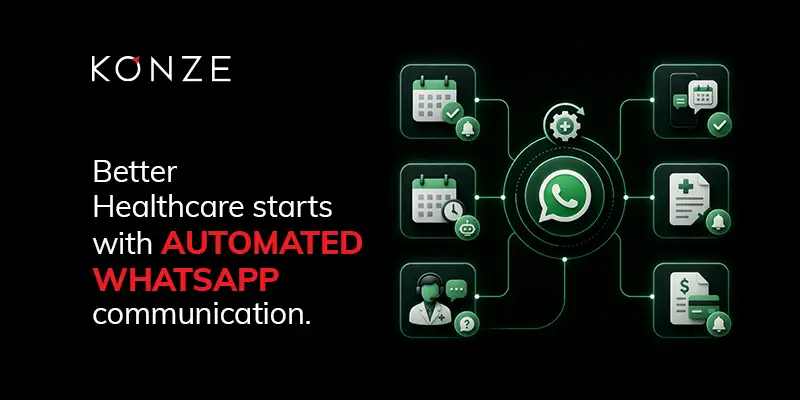
Healthcare providers today face a growing challenge: managing patient communication efficiently while maintaining high standards of care.
From appointment scheduling to follow-ups and test result notifications, clinics and hospitals handle hundreds of patient interactions every day. Many of these processes are still manual, requiring administrative teams to respond to calls, emails, and messages across multiple platforms.
As patient expectations shift toward faster digital interactions, healthcare providers are increasingly adopting WhatsApp automation in healthcare to streamline operations and improve engagement.
By integrating AI-powered automation with messaging platforms like WhatsApp, healthcare organizations can simplify communication workflows, reduce administrative workload, and enhance the overall patient experience.
What is WhatsApp Automation in Healthcare?
WhatsApp automation in healthcare refers to the use of automated workflows, chatbots, and intelligent messaging systems integrated with the WhatsApp Business API for healthcare.
Instead of responding manually to every patient message, healthcare providers can automate routine interactions such as:
- appointment confirmations
- appointment reminder automation
- patient inquiries
- follow-up messages
- prescription reminders
- billing notifications
With AI in healthcare communication, chatbots can instantly answer common patient questions and guide users toward the appropriate services or departments.
This approach enables clinics and hospitals to maintain continuous automated patient communication without increasing administrative workload.
Why Patient Communication Automation is Becoming Essential?
Healthcare communication involves a large number of repetitive interactions that consume valuable administrative time.
Common challenges healthcare providers face include:
- High call volumes: Patients frequently contact clinics to check appointment availability or confirm bookings.
- Missed appointments: Without timely reminders, patients often forget scheduled consultations.
- Delayed responses: Manual communication channels can cause delays in responding to patient queries.
- Fragmented communication systems: Many healthcare organizations manage multiple channels such as phone, email, and messaging apps without integration.
By adopting patient communication automation, healthcare providers can centralize communication and ensure faster, more reliable interactions with patients.
Key Use Cases of WhatsApp Automation in Healthcare
Healthcare providers are increasingly using AI-powered WhatsApp automation to manage critical aspects of patient engagement.
Appointment Scheduling and Confirmation
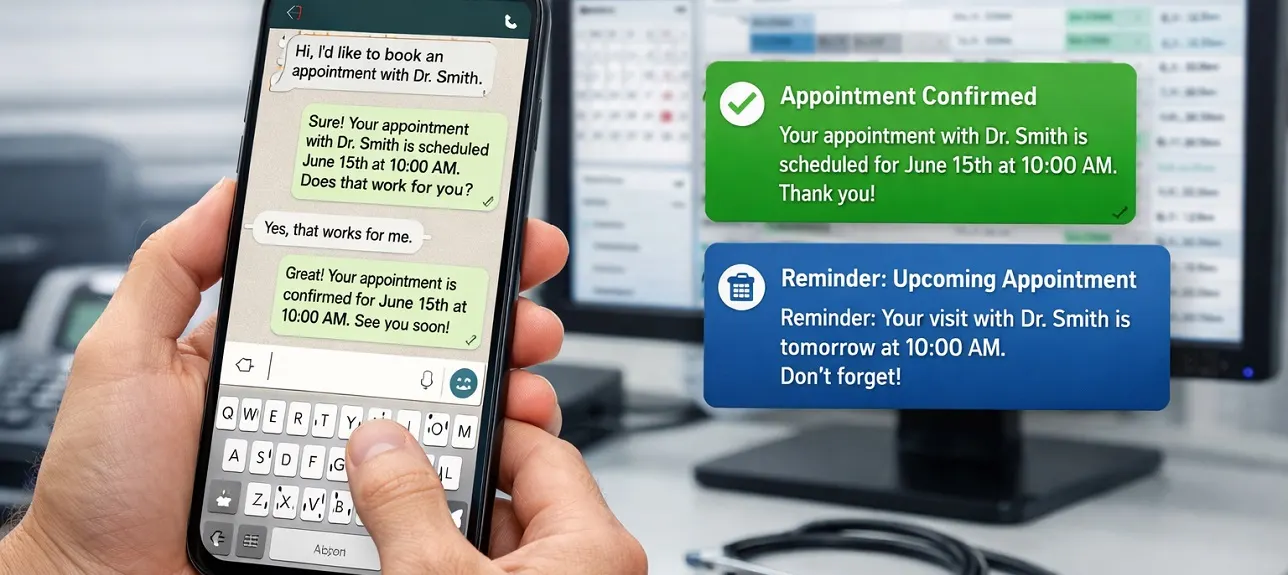
Patients can schedule appointments directly through automated WhatsApp chat flows.
Once the appointment is booked, the system sends instant confirmation messages, reducing the need for manual coordination by clinic staff.
This creates a seamless digital healthcare communication experience for patients.
Automated Appointment Reminders
Missed appointments create scheduling gaps and operational inefficiencies.
Using appointment reminder automation, healthcare providers can send reminders:
- 24 hours before the appointment
- on the day of the consultation
- shortly before the scheduled time
These reminders significantly reduce no-show rates and improve clinic workflow.
Patient Query Management with Healthcare Chatbots
Patients often have routine questions about:
- clinic timings
- doctor availability
- consultation preparation
- services offered
An AI-powered healthcare chatbot can instantly respond to these queries, improving response time and enhancing AI-powered patient engagement.
Follow-Up Care Communication
After consultations, healthcare providers often need to maintain contact with patients.
With automated patient communication, providers can send:
- medication reminders
- follow-up appointment prompts
- recovery instructions
- health monitoring check-ins
These messages help maintain patient engagement and improve treatment outcomes.
Test Result Notifications
Healthcare facilities can use WhatsApp Business API for healthcare to notify patients when test results are available.
Automated notifications reduce the need for patients to repeatedly contact clinics for updates.
Benefits of WhatsApp Automation in Healthcare
Healthcare organizations adopting AI-powered WhatsApp automation experience several operational improvements.
- Faster Patient Communication: Automated systems respond instantly to patient queries, improving response times and satisfaction.
- Reduced Administrative Workload: Routine communication tasks are handled by automated systems, allowing healthcare staff to focus on patient care.
- Improved Appointment Management: With appointment reminder automation, clinics experience fewer missed appointments and better scheduling efficiency.
- Higher Patient Engagement: Patients are more likely to respond to messages on platforms they use daily, making WhatsApp an effective channel for digital healthcare communication.
- Scalable Communication Infrastructure: Automation allows healthcare providers to manage large volumes of patient interactions without increasing staff.
Security and Compliance Considerations
While automation offers efficiency, healthcare communication must prioritize patient data protection.
When implementing WhatsApp automation in healthcare, organizations should ensure:
- encrypted messaging platforms
- secure data storage practices
- compliance with healthcare regulations
- controlled access to patient information
Partnering with experienced technology providers ensures that AI in healthcare communication is implemented responsibly and securely.
The Future of AI in Healthcare Communication
As artificial intelligence continues to evolve, AI-powered patient engagement will become even more advanced.
Future developments may include:
- predictive patient engagement
- personalized health reminders
- AI-powered teleconsultation support
- intelligent patient monitoring alerts
Automation will not replace healthcare professionals but will enhance their ability to deliver efficient care and better patient communication.

How KONZE Helps Businesses Implement AI Automation?
At KONZE, we help organizations implement AI-powered automation systems that simplify communication and improve operational efficiency.
Our solutions enable businesses to:
- automate customer and patient communication
- integrate messaging platforms with AI workflows
- streamline operational processes
- enhance digital engagement across platforms
By combining AI automation, messaging platforms, and intelligent workflows, KONZE helps businesses build smarter communication systems.
Conclusion
Efficient patient communication is critical to delivering high-quality healthcare services.
However, manual communication processes often create operational bottlenecks and delays.
By implementing WhatsApp automation in healthcare, providers can streamline appointment scheduling, improve patient engagement, and automate routine communication tasks.
As digital healthcare continues to evolve, AI-powered messaging systems will play a central role in improving how healthcare organizations interact with patients.
FAQs
Q1. Can healthcare providers use WhatsApp for patient communication?
Yes. Using the WhatsApp Business API for healthcare, providers can automate appointment reminders, respond to patient queries, and improve communication efficiency.
Q2. Does WhatsApp automation reduce missed appointments?
Yes. Appointment reminder automation significantly reduces missed consultations by notifying patients before their scheduled appointments.
Q3. Can AI chatbots handle patient queries?
An AI-powered healthcare chatbot can instantly answer common questions related to appointments, clinic timings, and services.
Q4. Is WhatsApp automation secure for healthcare communication?
When implemented with proper encryption and compliance measures, WhatsApp automation in healthcare can provide a secure communication channel.