
Drag

How WhatsApp Automation is Transforming Customer Communication in Insurance?

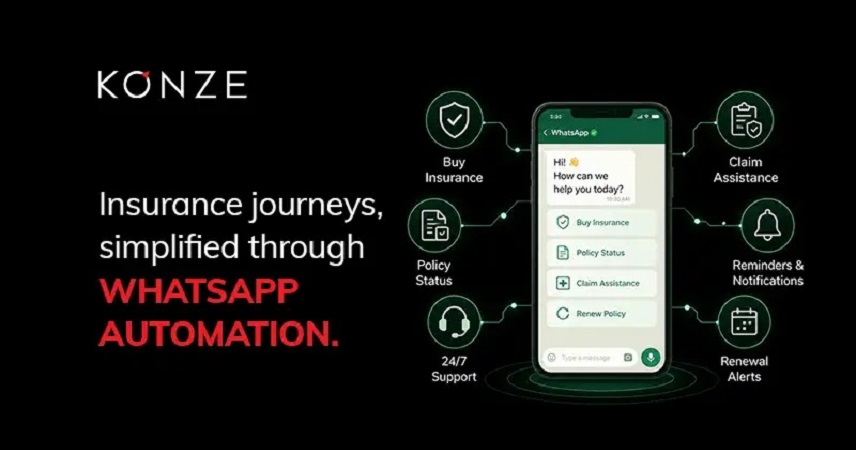
WhatsApp Automation in Insurance

Insurance providers today face a common problem - too many customer queries, too many touchpoints and too much manual work.

From policy comparisons to claims support, most interactions are still handled manually across calls, emails and websites.

But customer expectations have changed.

People now expect:

This is where WhatsApp automation in insurance is becoming a game changer.

What is WhatsApp Automation in Insurance?

WhatsApp automation in insurance refers to using:

to handle customer communication without manual effort.

Instead of agents responding to every query, automation handles:

This enables automated insurance customer communication at scale.

Why Insurance Companies Need Communication Automation?

Insurance journeys are often:

Common Problems:

Automation solves these gaps.

Key Use Cases of WhatsApp Automation in Insurance

Policy Comparison & Instant Quotes

Users can:

→ directly on WhatsApp

This simplifies the insurance buying journey.

Automated Policy Renewal Reminders

Missed renewals = lost customers.

Automation enables:

→ improving retention.

Claims Assistance & Status Updates

Customers often struggle with claims.

Automation helps:

→ reducing frustration.

Lead Qualification & Follow-Ups

Not every lead is ready to buy.

AI workflows can:

→ improving conversion rates.

Customer Support with Insurance Chatbots

Common queries like:

→ handled instantly via chatbot

This improves AI-powered customer engagement.

Benefits of WhatsApp Automation in Insurance

Manual vs Automated Insurance Communication

FactorManual ProcessAutomated (WhatsApp)
Response TimeSlowInstant
Lead HandlingLimitedScalable
Follow-UpsInconsistentAutomated
Customer ExperienceFragmentedSeamless
Conversion RateLowerHigher

Security & Compliance in Insurance Automation

Insurance involves sensitive data.

Key requirements:

Automation must be secure and compliant.

The Future of AI in Insurance Communication

Automation is evolving beyond basic chatbots.

Future trends:

Insurance is moving toward fully digital customer experiences.

How KONZE Helps Insurance Businesses Scale Communication?

At KONZE, we help insurance businesses:

From lead generation to policy purchase and renewal, automation creates a complete customer journey.

Conclusion

Efficient customer communication is critical to delivering a seamless insurance experience.

However, manual processes often lead to delays, missed follow-ups and lost conversion opportunities.

By implementing WhatsApp automation in insurance, providers can streamline policy inquiries, improve customer engagement and automate repetitive communication tasks such as renewals and claims updates.

As the insurance industry continues to shift toward digital-first interactions, AI-powered communication systems will play a key role in transforming how insurers connect with customers.

FAQs

WhatsApp automation in insurance refers to using AI-powered chatbots and automated workflows integrated with WhatsApp Business API for insurance to handle customer communication such as policy inquiries, renewals and claims updates.

It helps insurance businesses improve response times, automate repetitive tasks, reduce manual workload and enhance customer communication automation, leading to better engagement and higher conversions.

Yes. By enabling instant responses, structured conversations and insurance lead automation workflows, businesses can guide users through the buying journey and improve conversion rates.

An insurance chatbot powered by AI can instantly answer common customer questions related to policy coverage, pricing, claims processes and renewals, improving response efficiency.

When implemented with proper encryption, secure API integration and compliance measures, WhatsApp automation in insurance provides a safe and reliable communication channel.

Key benefits include faster communication, reduced operational costs, improved customer experience, scalable support systems and more efficient automated insurance communication workflows.

Comments are closed